


Unique STEM Learning Opportunities
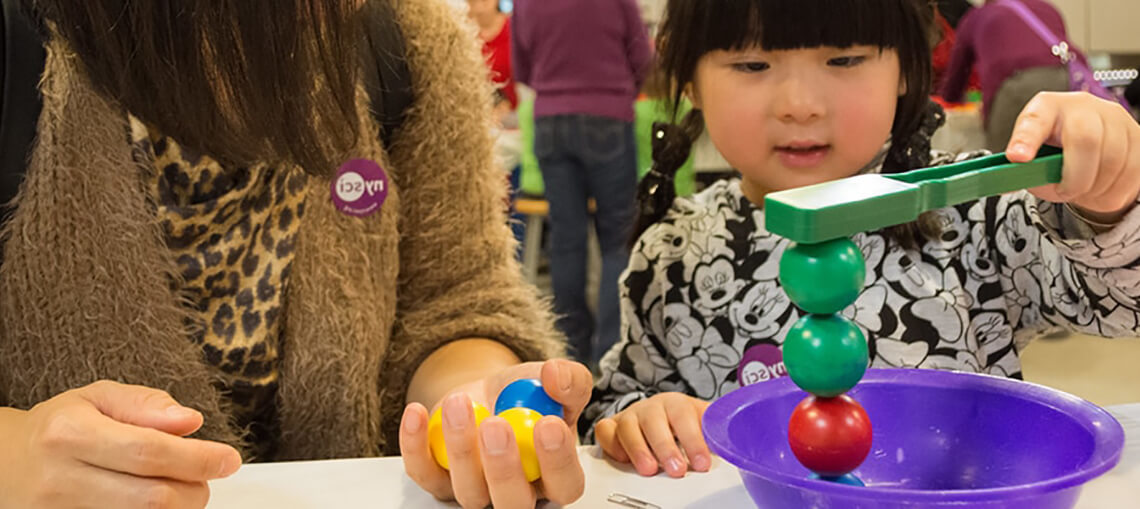
NYSCI’s access programs and resources are designed to encourage the participation of neurodiverse children and their families, inviting everyone to learn and discover the wonder of science in a supportive environment. Through hands-on exposure to new materials, tools, and experiences these free events provide opportunities to enjoy family time and allow parents to interact with others facing similar challenges and build a sense of community.
NYSCI is committed to engaging and empowering learners of all abilities to explore their strengths and skills in science, technology, engineering and math (STEM) by fostering the excitement of self-directed exploration and by tapping into the joy of play in a safe, supportive and understanding environment.
Saturday Sensory Hour
Every Saturday from 10am - 11am, we dim our lights and quiet our exhibits so that visitors can have an all around less stimulating experience here before it gets crowded.


Sensory Sensitive Backpack
We have free backpacks to borrow during your visit that include sunglasses, headphones, fidget toys, and a social narrative card that explains exactly what to expect at the Hall of Science - with visuals! This is available upon request at the front desk; ask a staff member.
Sensory Playdates
Sensory Sensitive Playdates are specially designed events that provide young neurodiverse children with a welcoming space to explore science, play, and connect with others. These playdates are offered in two age groups, ages 2–4 years and 4–8 years, to ensure activities are developmentally appropriate. Each session emphasizes hands-on learning, social interaction, and play in a supportive, community-focused environment where children can engage comfortably at their own pace.
Pre-registration is required. To join our mailing list and be notified when the next series is offered, or to request additional information, please contact Madiha Naeem, Early Childhood Instructor (mnaeem@nysci.org).

Social Narrative
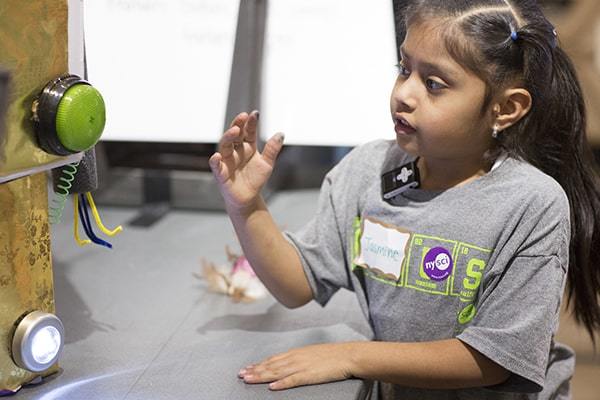
We offer a wonderful social narrative that you can view before you visit the New York Hall of Science. This resource is designed to help families prepare for their experience by providing a clear and supportive overview of what to expect during their visit.
Ask for one at admission. Check out the social narrative card in advance here.
Sensory Play At Home
Sensory play is any activity that stimulates the senses and it is crucial for the cognitive, emotional, and physical development of children (and adults!) of all ages. Sensory activities are open-ended and encourage exploration of materials and processes, rather than the end product.
Recognizing and interpreting sensory information helps build nerve connections in a child’s brain that in turn helps them engage in more complex and sophisticated learning tasks. It also supports language development as children learn to use adjectives to describe items and experiences (hot, cold, wet, sticky, etc.) As well as encouraging children to naturally use scientific processes as they play, create, investigate, and explore using their senses.
Engaging neurodiverse children in sensory activities is especially beneficial. Encouraging a child to engage in sensory play may help with social and communication abilities, while also helping them self-regulate during overwhelming experiences. Along with the cognitive and physical benefits, sensory play is an effective coping strategy to help children (and adults) reduce levels of stress and anxiety.
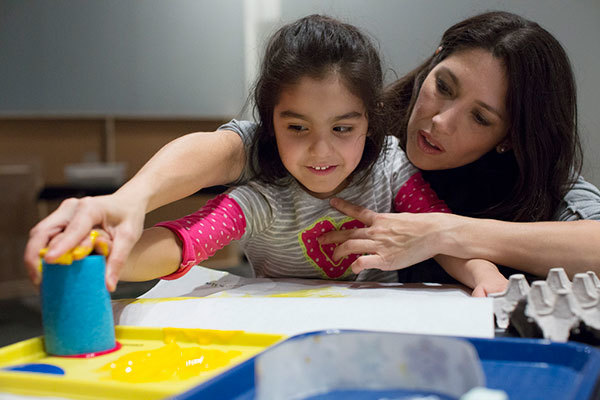
Engaging children with extra needs in sensory activities is especially beneficial. Encouraging a child to engage in sensory play may help with social and communication abilities, while also helping them self-regulate during overwhelming experiences. Along with the cognitive and physical benefits, sensory play is an effective coping strategy to help children (and adults) reduce levels of stress and anxiety.
Download: Cloud Dough Sensory Play Guide →
Download: The Ice Cube Sensory Play Guide →
Download: The Sensory Painting Guide →
Download: The Sensory Fizzy Dough Guide →
Download: The Foam Blocks Sensory Play Guide →
Download: The Colors of Density Sensory Activity →
Visual Activity Guides
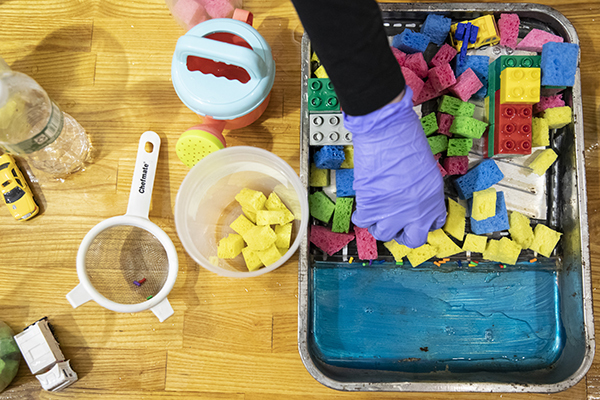
Many children are strong visual learners and visual thinkers, especially children with autism. Given this strength, NYSCI has created Visual Activity Guides—visual step-by-step instructions to help engage children in STEAM activities when verbal communication and instructions are difficult. Visual Activity Guides encourage the whole family to participate in playful hands-on activities while promoting a positive learning experience that is clear and engaging.
Use these Visual Activity Guides in a way that best makes sense for your child: printed on paper or displayed on a screen. Your child should be able to see the guide before beginning the activity and the guide should continue to be visible throughout. At first, you may need to physically guide your child (for example, gently guide your child by the shoulder and prompt them to point to each step). Try doing the activity more than once and gradually decrease physical prompts as your child begins to use the visual activity guide more independently.
Download: Cloud Dough →
Download: Mud Painting →
Download: Cornstarch Clay →
Download: Making Moon Sand Visual Guide →
Download: Make Ooblek with Ice Cubes and Cornstarch Visual Guide →
Download: Dish Soap Putty Visual Guide →
Download: Paper Clay Creations Visual Guide →
Download: Shadow Puppets Visual Guide →
Download: Flower Pounding Visual Guide →
Download: Marveling Art Visual Guide →
Download: Crystal Salt Science Visual Guide →
Video Modeling: Stem Activities
Video modeling is a form of assistive visual tool where complex tasks are broken down into simpler steps and video recorded. The viewer can watch the recording as many times as is needed before performing the task. It is helpful in that it offers a repetitive and consistent format for students who learn best through direct support and instruction.
Video modeling is also a useful teaching strategy to visually model a wide range of skills, abilities and behaviors to children with autism and other developmental challenges in a way that’s less threatening or overwhelming than face to face instruction. It can be especially effective for teaching and scaffolding STEM (science, technology, engineering and math) subjects and activities as it allows children to learn at their own pace without being distracted by stimuli that may interfere with learning.
When first using video modeling, educators or adult caretakers should stop the video recording after each step of the task or behavior so that the child can practice the targeted skill. It can also be more effective when integrated with other methods such as picture prompting, visual schedules and social narratives.
Here are some more Video Modeling activities by NYSCI:
YouTube Link: How to Make Mud Paint
YouTube Link: How to Make a Mini Projector
YouTube Link: Video Modeling Marveling Art
YouTube Link: Shake Painting Video